Staffordshire
Bull Terrier
Puppies
Elitebull and Lackyle Lines - Since 2013
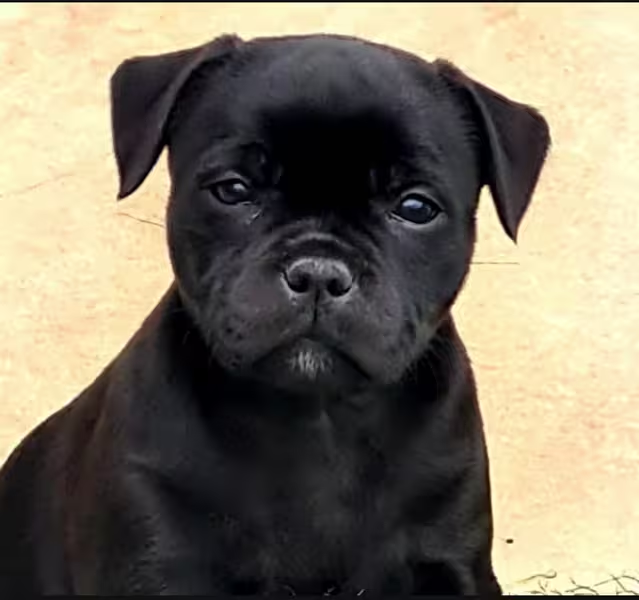
Our puppies are born and raised in the family, surrounded by love and positive stimuli. We select for health, character and breed type, following the best English and Irish bloodlines.
Our Puppies
Our Approach
Temperament and Socialization
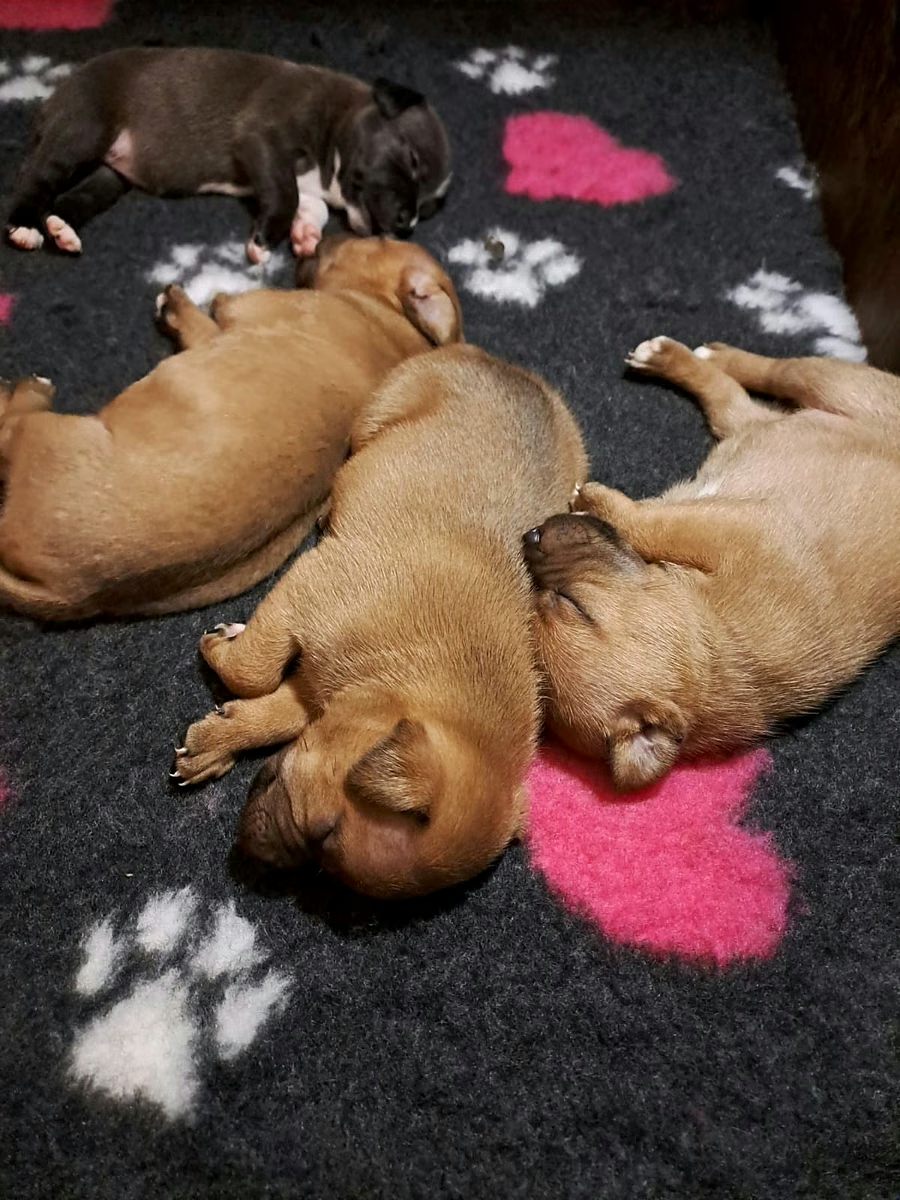
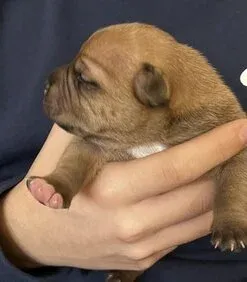
Puppies are born indoors, in the whelping box, and stay there for about a month: it is the phase in which the mother does everything and human contact matters most. At around thirty days they move to a dedicated pen with outdoor access, for a practical reason anyone who has raised a litter knows: at that age they soil more than a lived-in house can take. From then on they come back inside in turns, two at a time for a few hours, so each of them gets its own share of the house.
 Bio Sensor: what the research actually says
The ENS method, the evidence that is missing, and what counts in the first eight weeks.
Bio Sensor: what the research actually says
The ENS method, the evidence that is missing, and what counts in the first eight weeks.
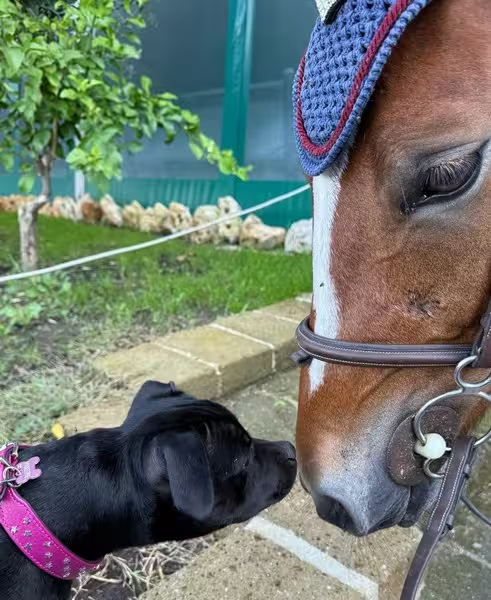
They learn to recognize household sounds, different people, other animals. This early socialization is essential to develop a confident and calm temperament.
Family Life
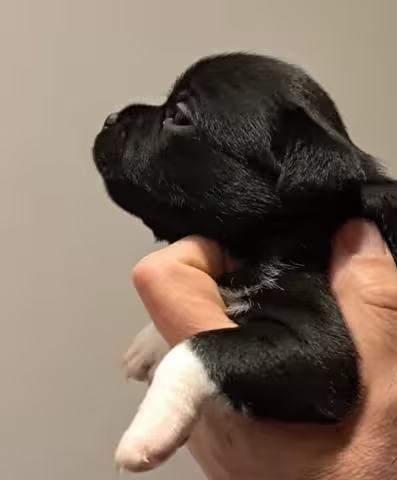
The Staffy is known as the "nanny dog" for its patience with children. It's a dog that loves being with people, participating in daily life, being an integral part of the family. It's not a backyard dog: it's a life companion.
From the season to the whelping: how a litter comes about
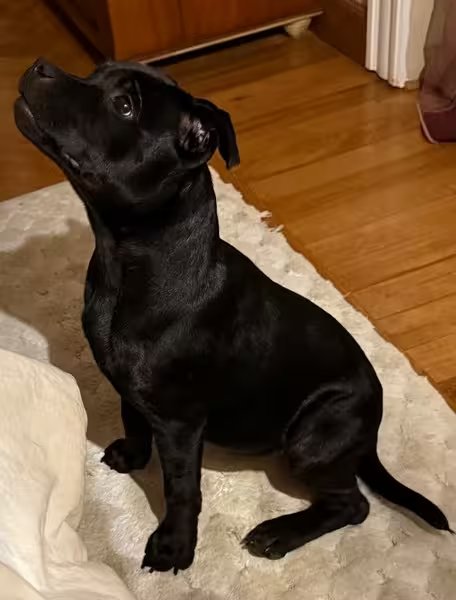
Plenty gets said about what happens after the puppies are born. About what happens before, almost nothing — and yet that is where most of how a litter goes is decided.
Before the season
It starts at the vet, not at the stud dog. If the bitch is regular and I have the record of her previous seasons, I know roughly when the next one is due and the examination happens shortly before; otherwise we go as soon as the season is clearly under way.
At that visit we take a vaginal swab for bacterial culture, to rule out organisms that would compromise the pregnancy, and worm her if needed.
Then the progesterone testing begins. This is not a hobbyist's detail: the fertile window cannot be guessed from the day the season started, and getting it wrong by 48 hours means no puppies. Blood is drawn at intervals until the value peaks, and that is the day. Each test costs 40 euros and at least four are needed: this and every other expense is listed in what a litter costs us, item by item.
The mating
I always travel to the stud, never the other way round: the male stays at home, the bitch moves.
With a stud of real quality, the owner often uses a vet for artificial insemination, deposited intracervically. There are three reasons: avoiding the risk of transmissible disease, sparing the dog excessive effort, and being certain the mating actually happens. Because — and this is something people outside breeding do not picture — mating is not easy for every male. Much depends on the bitch: more than one makes it anything but simple.
Pregnancy: two examinations, two different purposes
The ultrasound scan, after at least 25 days. It tells us whether she is in whelp, and a capable vet will already give a rough idea of the number. But it remains an estimate.
The radiograph, five to seven days before whelping. This one gives the exact count, obtained by counting skulls and spines, which by then are calcified and visible.
It is not a flourish: it is the information you need during the whelping, especially a natural one. You have to know how many puppies must come out, and that they all have, each with its placenta. Without that number you are going on instinct, and on instinct a retained puppy or a retained placenta is found out late.
The whelping
In the Staffordshire Bull Terrier a natural whelping is the norm: it is a hardy breed, and a caesarean here has been a rare exception. But when something goes wrong there is no improvising: I call my own vet, who judges case by case.
Oxytocin is used with great care and sparingly, and only when the vet decides so. It is not an accelerator to be given because the whelping is taking its time: if a puppy is obstructing, stronger contractions are the last thing needed, and the risk is uterine rupture.
The first week
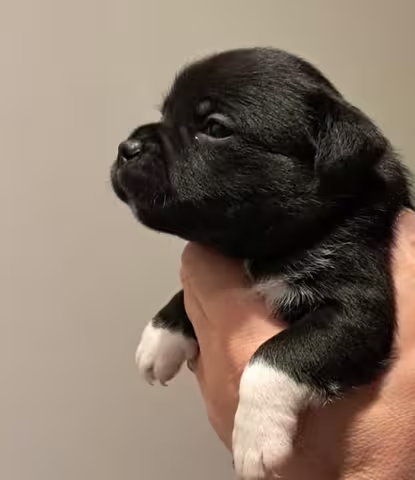
The puppies are born indoors, in the whelping box. And for a week I stop sleeping in my bed: I settle on the sofa, next to them.
That is not sentiment, it is the riskiest part of all. In those days a puppy can be crushed by the mother turning over, or a bitch can be reluctant to nurse: these are things you hear before you see them — a different whimper, a sound that is not right. After the first week it eases.
The day they can leave
Vaccination and microchip are done by the vet, and that is what makes a puppy eligible to leave. Italian law sets the minimum at 60 days; here they leave at around 70, because those extra ten days are for them. For placements abroad the timing stretches further: that is covered on its own page.
What to ask a breeder
If you are considering a litter, whoever is breeding it, these are the questions nobody can dodge:
- Was progesterone tested? If the answer is "we took her to the dog on day ten", it was left to luck.
- Was a pre-whelping radiograph taken? If not, nobody knew how many puppies to expect during the whelping.
- Where did the mother whelp, and who was there? The first week is when puppies are lost.
- When do they leave? Under 60 days is against the law, and it is not a paperwork detail.
A puppy going abroad
A puppy going to a family in another European country leaves at around four months, not two: the rabies vaccination cannot be given before 12 weeks and needs time to become valid. A pet passport, a TRACES health certificate and an ENCI export pedigree are also required.
How a placement abroad works: timing, paperwork and export pedigree →
Puppy FAQ
What is behind a puppy with an ENCI pedigree?
Years of selection, complete genetic testing (L2HGA, HC), an ENCI pedigree, vaccinations, microchip and the support we go on giving. Write to us and we will tell you about our dogs and our litters.
How do we get to know each other?
Write to us on WhatsApp or call. We like to talk at length before anything else: about the breed, about your household, about our dogs. You are welcome to visit the kennel by appointment and meet the parents.
What People Say About Us
"Paolo is a guarantee for this breed. Home-raised puppies, continuous support and great expertise. Our Staffy is perfect!"
"Love at first sight exists... trust me. Professionalism, passion and balanced, healthy puppies. I recommend this kennel to everyone."
Guides for those looking for a kennel in Italy
For a detailed account of what lies behind a well-bred puppy, read how much a Staffordshire Bull Terrier puppy costs.
Want Info About Puppies?
Call us or write on WhatsApp for information about available litters.
Write Us on WhatsApp