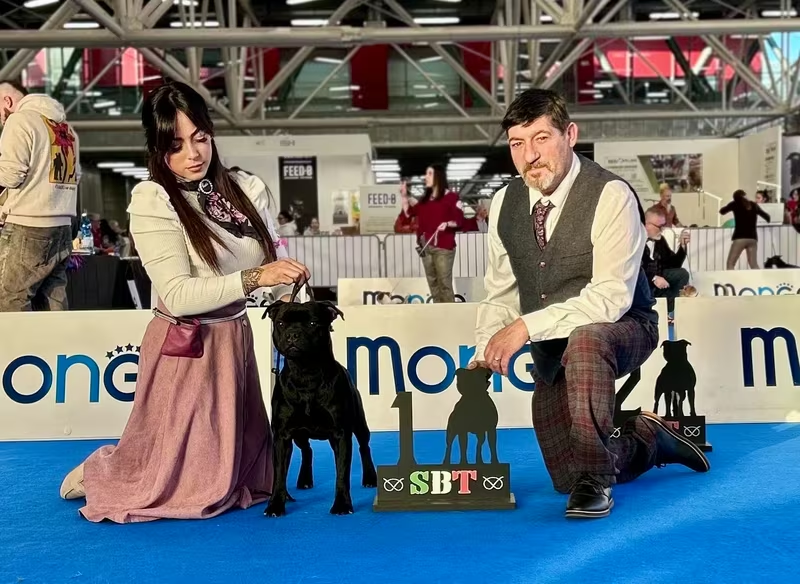
BOAS in
Staffordshire
Bull Terriers
Why breathing matters
Brachycephalic obstructive airway syndrome is a growing problem in many breeds. The Staffy shouldn't be affected, but poor breeding choices are changing that. Here's what you need to know.
Brachycephalic Obstructive Airway Syndrome
BOAS (Brachycephalic Obstructive Airway Syndrome) is a set of anatomical abnormalities that cause upper airway obstruction in short-muzzled dogs. It's not a single problem but a combination of defects that make breathing difficult.
According to VCA Animal Hospitals, the main abnormalities include:
- Stenotic nares – abnormally narrowed nostrils that restrict airflow
- Elongated soft palate – tissue that extends too far back into the throat, partially blocking the airway
- Everted laryngeal saccules – small pouches that get "sucked" into the airway
- Hypoplastic trachea – a windpipe with a smaller diameter than normal
The soft palate issue is particularly insidious. As reported by Cherrydown Vets: "100% of Pugs, French Bulldogs and English Bulldogs have an elongated or overlong soft palate. The soft palate in these breeds is often very thickened, further obstructing the airway and increasing the effort required for air to pass into the lungs."
The Staffordshire Bull Terrier Is NOT an Extreme Brachycephalic Breed
A Spectrum, Not a Category
The Kennel Club UK clarifies: "Brachycephaly occurs across a spectrum, from breeds with almost entirely flat faces (sometimes termed 'extreme brachycephaly'), such as the Pug and Japanese Chin, through to less exaggerated brachycephalic breeds such as the Boxer and Staffordshire Bull Terrier."
This means that the Staffy, by standard, should have a muzzle long enough to allow normal breathing.
The Stafford Knot's Position
The Stafford Knot, one of the most authoritative resources on the breed, is categorical: "We absolutely do NOT want the Staffordshire Bull Terrier to continue down the path of the BAS affected breeds such as French Bulldog or Pug. We are NOT a brachycephalic breed and we don't wish to be in that category."
This is a strong statement that all breeders should take seriously.
BOAS Is Rare in Staffies... If Bred Correctly
Research from the University of Cambridge confirms: "Whilst the 3 most popular brachycephalic breeds have an increased risk of having BOAS, in other brachycephalic breeds, BOAS is very rarely seen."
The Staffy falls into this second category – as long as it's bred correctly.
Why Many Breeders Ignore Breathing
Unfortunately, the trend toward ever-shorter muzzles is also affecting the Staffordshire Bull Terrier. Some breeders, chasing aesthetic fashion, select dogs with exaggerated heads and flat muzzles, ignoring the health consequences.
The WSAVA (World Small Animal Veterinary Association) is clear: "Existence of BOAS in the breed speaks for ensuring that dogs used for breeding have open nostrils and a long enough muzzle – and no clinical signs of BOAS."
Another issue is the normalization of symptoms. As reported in a scientific study published on PMC: "Positive changes to brachycephalic health may be impeded by a perception of BOAS being 'normal for the breed'. This perception must be avoided by owners, breeders, and vets alike to prevent undertreatment of individuals and the perpetuation of this serious disorder to future generations of dogs."
Warning Signs Not to Ignore
- Excessive snoring, even when awake
- Noisy breathing (stridor, snorting, wheezing)
- Exercise intolerance
- Difficulty cooling down after activity
- Frequent regurgitation of food or water
- Bluish gums (cyanosis) during exertion
- Fainting or collapse
- Wide-legged stance to breathe better
Important: If your Staffy shows these symptoms, don't assume it's "normal for the breed." Consult a veterinarian. Cornell University emphasizes that "early surgical intervention (dogs under 2 years of age) leads to better outcomes."
Why We Prioritize Breathing
At Del Piccolo Diavolo kennel, correct breathing is a non-negotiable criterion in selecting breeding dogs. We're not interested in following aesthetic trends that compromise health.
Every dog that enters our breeding program is evaluated for:
- Open nostrils – must allow adequate airflow
- Muzzle length – proportionate according to the standard, never exaggeratedly short
- Silent breathing – no abnormal sounds at rest or during moderate exertion
- Exercise tolerance – ability to be physically active without respiratory difficulties
We will never breed from dogs showing signs of BOAS, regardless of how beautiful or titled they are. Health comes before prizes.
How to Choose a Healthy Puppy
Observe the parents
When visiting a breeder, pay attention to the breathing of the breeding dogs. Do they breathe quietly? Can they exercise without gasping? Are their nostrils open or do they look "pinched"? If the parents have problems, the puppies will inherit them.
Ask about selection criteria
A responsible breeder will be happy to discuss their selection criteria for respiratory health. If they minimize the problem or say it's "normal for the breed," look elsewhere.
Beware of overly short muzzles
The Staffordshire Bull Terrier should have a short but not flat muzzle. If a puppy or its parents have an almost flat profile like a Pug, there's a breeding problem.
Check the environment
Puppies raised in hot, poorly ventilated environments might hide respiratory problems. A serious breeder will show you where the dogs live and how they manage their welfare.
Health Is Non-Negotiable
The Staffordshire Bull Terrier is a wonderful breed that deserves to breathe freely. As breeders, we have a responsibility to preserve their health, not to chase harmful aesthetic trends. Every breeding decision we make today will affect generations of dogs tomorrow.
Scientific and Authoritative References
- The Stafford Knot – Brachycephalic Airway Syndrome
- Kennel Club UK – Brachycephalic Health Issues
- University of Cambridge – BOAS Research Group
- VCA Animal Hospitals – Brachycephalic Airway Syndrome
- Cornell University – BOAS
- WSAVA – Meet the Staffordshire Bull Terrier
- PMC – Strategies for the management and prevention of BOAS
- Cherrydown Vets – BOAS
Questions About Staffy Health?
Contact us to discuss our breeding philosophy and selection criteria.
Message Us on WhatsApp